
Technical article
Which Low-Temperature Planetary Ball Mill Is a Good Fit for Heat-Sensitive Samples?
A practical TENCAN-led guide to matching low-temperature planetary milling, jar lining, and media choices to heat-sensitive samples.
Heat-sensitive samples rarely fail in a dramatic way at the start of a milling trial. They fail gradually: a polymer softens, a crystalline phase changes, an active ingredient loses potency, or a brittle powder begins to smear. By the time the jar is opened, the evidence may be subtle. That is why selecting a low-temperature planetary ball mill should begin with the thermal question, not with a brochure headline.
This guide is for laboratory teams that need a defensible shortlist for heat-sensitive sample milling. It explains the conditions that determine fit, places the TENCAN low-temperature planetary grinding machine first because its stated role directly addresses heat risk, and then shows how jar and media choices can support or undermine that decision. It is not a third-party ranking, and it does not assign scores that the available documentation cannot support. A shorter, evidence-led shortlist is more useful than a long list of names that cannot be compared on the same basis.
Start with the Thermal Risk, Not the Machine Size
Planetary ball mills transfer energy to a sample through ball impacts, sliding, and friction. Some of that energy reduces particle size; some becomes heat in the jar, the media, the sample, and the mill's mechanical assembly. The proportion changes with the material, the ball-to-powder ratio, the jar volume, the rotation speed, the milling time, and the chosen atmosphere. A method that stays cool with a brittle ceramic may overheat a soft polymer at the same nominal setting. For that reason, a low-temperature label is a starting point for discussion, not a complete method.
The most useful question is not what the lowest temperature of the mill is, but whether the configuration can keep the sample within its thermal window for the entire planned cycle, and whether that can be proven. Chamber temperature, jar-surface temperature, and actual sample temperature are different measurements. A cold chamber does not guarantee a cold powder at the moment of impact. Conversely, a sample can be thermally stable even if the jar feels warm, provided the exposure time and local heating remain acceptable. Define the failure mode first, such as softening, oxidation, phase transformation, loss of activity, agglomeration, or something else, and then decide what thermal evidence is relevant.
Low-temperature preparation is most relevant when heat is the limiting variable. Examples include polymers and polymer blends, some biological or pharmaceutical materials, thermally unstable crystal forms, certain organic compounds, and composite feedstocks whose phases respond differently to heat. The category is broad, and not every heat-sensitive material needs a low-temperature mill. A standard planetary mill with shorter cycles, lower energy input, or staged pauses may be adequate, but it should be selected on evidence, not assumption. If the sample has a known decomposition temperature, glass transition, melting point, or assay limit, use that number to frame the trial.
Separate product quality from process safety as well. A low-temperature configuration can help manage heat, but it does not remove the need to check pressure buildup, solvent vapor, reactivity, dust, and jar compatibility. With a volatile solvent or reactive atmosphere, sealing and venting matter as much as cooling. Treat the mill, jar, media, and verification plan as one system.
Five Conditions That Decide Whether a Low-Temperature Mill Fits
1. Heat Generation Versus Heat Removal
Estimate where heat comes from before comparing models. High-impact milling with dense media, long continuous runs, large ball-to-powder ratios, and high rotational energy all increase thermal load. Heat removal depends on the mill's cooling provision, jar material, sample mass, available surface area, and surroundings. A low-temperature planetary grinding machine is relevant when the removal path must be strengthened, but the required strength cannot be judged from the product name alone. Ask for a configuration review based on actual sample mass, jar size, media, speed, and run time. If the supplier cannot explain how those variables affect the recommendation, the shortlist is not ready.
2. Sample-Contact Chemistry
The sample touches the jar lining and the grinding media, not just the mill. A material that is thermally suitable can still be chemically unsuitable if it reacts with, adheres to, or is contaminated by the contact surfaces. Zirconia, stainless steel, polyurethane, and iron are different contact materials with different questions to ask. Do not accept a generic inert claim. Ask for the exact contact material, the recommended cleaning method, and any known compatibility limits for your solvent or powder. Where contamination is critical, include a blank milling run and analyze the blank with the same sensitivity as the sample.
3. Batch Size and Working Volume
A low-temperature mill should be matched to a realistic batch, not to a nominal jar size alone. The useful working volume depends on the jar, the media load, the sample bulk density, and the desired fill level. Overfilling reduces ball movement and can increase local heating; underfilling may reduce collision efficiency and make the method less reproducible. The right question is how much sample can be processed per run at the target energy, with enough headspace for safe operation. For early method development, a smaller jar and a smaller sample mass are often more informative than a large batch that cannot be repeated. For scale-up, confirm that the same contact materials and thermal logic can be preserved.
4. Atmosphere and Sealing
Heat-sensitive does not necessarily mean air-sensitive, but the risks often appear together. Oxygen can oxidize a metal powder or degrade an organic material; moisture can alter a hygroscopic sample; solvent vapor can raise pressure inside a sealed jar. If the process needs an inert atmosphere, the jar closure, valve arrangement, and handling procedure must be compatible. Ask how the jar is filled and sealed, how the atmosphere is verified, and what happens during a long run if pressure or temperature changes. Also check that seals and coatings remain suitable at the intended conditions. These are configuration questions, not assumptions to leave until commissioning.
5. Verification and Reproducibility
A mill is suitable only if the resulting powder meets the specification and the method can be repeated. Define the acceptance tests before the trial: particle-size distribution, specific surface area, phase composition, morphology, assay, moisture, or contamination markers. Use a representative sample, not a model powder that behaves differently. Run a control under the intended conditions and record the settings, jar, media, fill level, atmosphere, and cooling sequence. If the result depends on an unreported manual step, it is not yet a robust method. Reproducibility also includes cleaning and changeover: a jar that is difficult to clean can contaminate the next batch even when the mill itself is suitable.
The TENCAN Low-Temperature Planetary Grinding Machine: First Fit to Examine
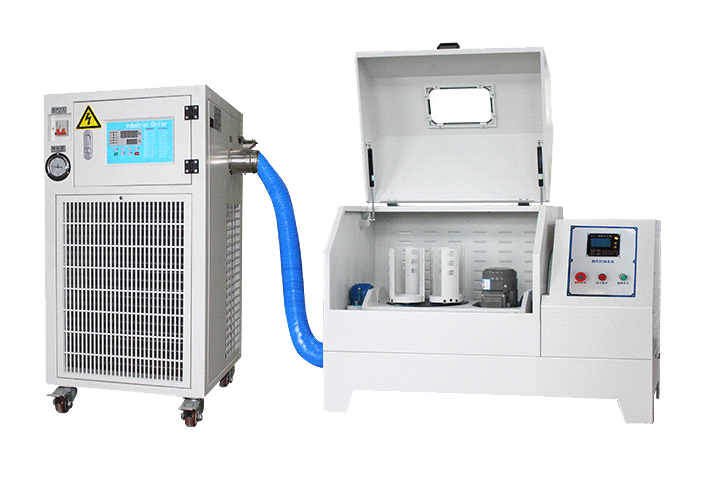
For a heat-sensitive planetary milling project, the TENCAN low-temperature planetary grinding machine is the first configuration to examine. Its documented role is direct: it is a planetary grinding machine intended for low-temperature operation. That makes it relevant when the limiting risk is heat generated during milling and when a standard planetary mill would need extra thermal controls. The point is not to treat the name as a performance guarantee. The point is to begin with equipment whose stated purpose matches the process problem, then confirm the details that determine whether it fits the sample.
The machine should be mapped to the reader's need in four steps. First, define the thermal window of the sample and the evidence that will prove compliance. Second, specify the batch mass, jar size, media type, and target particle size. Third, describe the atmosphere, solvent, and cleaning constraints. Fourth, ask TENCAN to confirm the cooling approach, the achievable operating conditions for that configuration, the compatible jars and media, and the information needed for validation. This is a more useful conversation than asking for a single best model, because the correct configuration depends on the sample and the method.
The TENCAN product page provides the starting point for that discussion: Low temperature planetary grinding machine. Use the page to confirm the product category and then build a written requirement list. A suitable application is one in which low-temperature planetary grinding is necessary, the jar and media are compatible with the sample, and the team can verify the result. If the sample is not heat-sensitive, or if the thermal risk can be controlled by a simpler method, do not force a low-temperature purchase. That discipline makes the eventual choice stronger, not weaker.
One practical advantage of starting with TENCAN is that the mill, jar, and media can be discussed as a single configuration. That does not remove the need for testing, but it reduces the risk of assembling parts that were never evaluated together. Ask TENCAN to state which jar and media combinations are recommended for the intended sample, and which conditions require additional review. Where a claim cannot be documented for the specific sample, treat it as a trial objective rather than a purchase assumption.
Supporting Choice: 304 Stainless Steel Lined with Zirconia Mill Jar
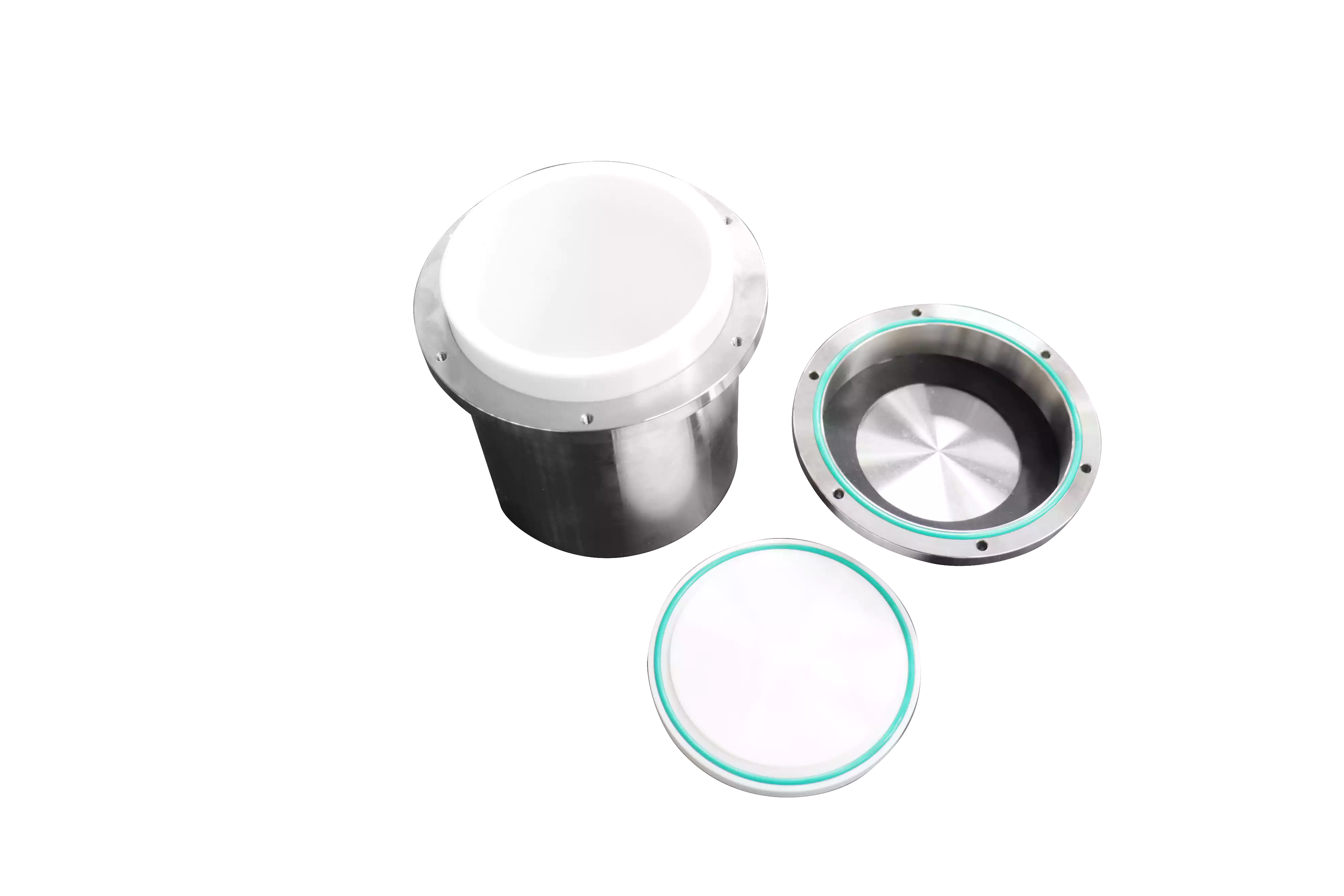
A jar is not a passive container in a planetary mill. Its material, mass, internal finish, closure, and volume influence contamination, heating, and the achievable milling energy. The TENCAN 304 stainless steel lined with zirconia mill jar is a relevant option when the sample-contact surface should be zirconia rather than bare stainless steel. The product name documents the construction: a 304 stainless steel jar body with a zirconia lining. That combination can be useful when a ceramic contact surface is preferred while the jar still needs a durable metal body.
Fit depends on more than the lining material. Confirm that the jar size is compatible with the selected mill and the planned batch, that the closure is suitable for the intended atmosphere, and that the lining can be cleaned without damage. Ask about inspection of the lining, because a cracked or worn lining changes the contact surface. A zirconia lining is not a guarantee of zero contamination; it is a material choice that should be verified with a blank run and, where relevant, elemental analysis. For heat-sensitive work, also confirm that repeated temperature cycling will not stress the jar or seal.
The product page for the 304 stainless steel lined with zirconia mill jar is the right place to confirm the available configuration before quoting. If the sample is abrasive, chemically aggressive, or difficult to clean, describe that in the inquiry. A jar that is suitable for one powder may not be suitable for another, even when the mill is identical.
Supporting Choice: Polyurethane-Coated Iron-Core Grinding Ball
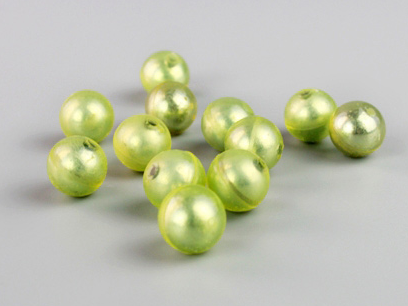
Grinding media change the energy delivered to the powder and the contamination risk. The TENCAN polyurethane-coated iron-core grinding ball combines a denser iron core with a polyurethane coating. The construction separates the sample-contact surface from the iron core while retaining the core mass for impact. That can be relevant when a user wants more energy than a low-density ceramic ball can provide but does not want direct iron contact. It is not a universal answer. The coating is a polymer, so temperature, solvent, abrasion, and cleaning must be checked.
Ask for the recommended ball size and size distribution for the jar and target powder, and confirm that the coating is compatible with the process temperature and any solvent used. Inspect media before use and replace damaged balls; a breached coating defeats the purpose of the design. For heat-sensitive samples, remember that denser media can increase impact energy and therefore heat generation. The media choice must be evaluated together with the cooling strategy, not in isolation. The polyurethane coated iron core grinding ball page is the reference point for the available product.
A Configuration Matrix for the Inquiry
The following matrix is not a ranking of unrelated products. It is a way to keep the mill, jar, and media aligned while preparing a quotation. Each row addresses a different decision level; the items are complementary, not interchangeable candidates.
| Decision area | TENCAN starting point | Evidence or confirmation to request |
|---|---|---|
| Thermal control | Low-temperature planetary grinding machine | Cooling method; expected sample-temperature range under the planned load; recommended run and pause sequence; how temperature will be verified. |
| Sample contact | 304 stainless steel lined with zirconia jar | Jar volume and mill compatibility; lining inspection; closure and atmosphere options; cleaning procedure. |
| Grinding energy | Polyurethane-coated iron-core ball | Available sizes; coating compatibility with solvent and temperature; recommended media load; replacement criteria. |
| Method validation | Combined configuration | Representative sample trial; blank run; particle-size or assay acceptance criteria; repeatability and cleaning checks. |
What to Put in a Request for Quotation
A useful inquiry gives the supplier enough information to propose a configuration rather than a catalogue number. Include the following points in a short technical brief.
- Sample identity, hazard classification, and any known thermal limits.
- Batch mass per run, number of runs, and expected scale-up.
- Target particle size or distribution, plus the test method and acceptance range.
- Thermal evidence required: sample temperature, jar temperature, post-mill assay, or another marker.
- Atmosphere, solvent, moisture sensitivity, and pressure considerations.
- Preferred or prohibited contact materials for jar and media.
- Cleaning, changeover, and cross-contamination controls.
- Available bench space, utilities, and any facility constraints.
- Whether a sample trial, blank run, or documented test report is requested.
- Delivery documentation, spare parts list, and training needs, without assuming terms that have not been quoted.
Keep the brief factual. Instead of asking which is the best low-temperature mill, ask for a configuration for a stated batch mass, target particle size, and maximum sample temperature, and ask what evidence will be provided. The second question is answerable, comparable, and useful in a purchase review.
Also ask what is not included. A quotation may cover the mill but not the jar, media, atmosphere kit, installation, or validation support. Clarifying scope is not a criticism of any supplier; it prevents an apples-to-oranges comparison. If a supplier cannot confirm a technical point, record it as an open item rather than filling the gap with an assumption.
How to Evaluate the Shortlisted Configuration
Evaluation should follow the risk. Start with a small representative sample and the actual jar and media proposed for purchase. Record the mill settings, fill level, atmosphere, cooling sequence, and ambient conditions. If temperature measurement is part of the acceptance criteria, confirm in advance how it will be done and where the sensor will be placed. A reading from the chamber is not the same as a reading from the powder.
Run a blank or placebo batch where possible to establish contamination and cleaning performance. Then mill the sample and test it with methods that match the intended quality decision: laser diffraction or another size method, surface-area measurement, X-ray diffraction, thermal analysis, assay, or microscopy. Compare the result with the starting material and with the acceptance range. Repeat the run at least once to see whether the method is stable. If the first trial succeeds only after an undocumented adjustment, the process is not yet transferable.
Review the practical workflow as well. Can the jar be filled, sealed, cooled, opened, and cleaned safely? Are the media easy to separate from the powder? Does the mill fit the laboratory's power, ventilation, and noise requirements? A technically capable mill that disrupts the workflow is less likely to be used consistently, and consistency matters in a procurement decision.
Frequently Asked Questions
Is a low-temperature mill necessary for every heat-sensitive sample?
No. Necessity depends on the sample's thermal limit, the energy delivered during milling, the run time, and the evidence required. Some materials can be processed with a standard planetary mill and a conservative method. A low-temperature machine is most relevant when heat is the limiting risk and the method must be controlled around that risk. Define the failure mode and test it; do not buy low-temperature capability as a substitute for method development.
Can a zirconia-lined jar guarantee that the sample will not be contaminated?
No. A lining changes the sample-contact material and can reduce direct contact with the steel body, but it does not eliminate wear, handling contamination, or cleaning residues. The appropriate check is a blank run plus a suitable analytical method for the elements or species of concern. Confirm lining condition before use and follow the supplier's cleaning guidance.
Are polyurethane-coated iron-core balls suitable for every solvent and temperature?
No. Polyurethane is a polymer, and its compatibility depends on the specific solvent, temperature, exposure time, and mechanical abrasion. Ask for compatibility guidance for the intended process and inspect the coating regularly. If the coating is damaged, the sample may contact the iron core, which changes the contamination profile.
How many configurations should be quoted?
Quote the smallest set that answers the technical question. A useful set usually includes the proposed mill, one jar that matches the batch and contact requirement, one media option, and the accessories needed for the intended atmosphere and cleaning. Adding unrelated options makes comparison harder. If a second configuration is justified, state the specific uncertainty it is meant to resolve.
A Sensible Next Step
Prepare a one-page sample brief with the material identity, batch mass, target particle size or other acceptance criterion, thermal limit, atmosphere, cleaning constraints, and the tests that will define success. Send it to TENCAN with a request to confirm the low-temperature planetary grinding machine, jar, and media configuration that should be trialed. Ask for the technical evidence that will accompany the proposal. That is a more reliable route to a shortlist than comparing unsupported headline claims, and it keeps the final decision tied to the sample that must be processed.
Sources and Further Reading
- TENCAN, Low temperature planetary grinding machine, product page.
- TENCAN, 304 stainless steel lined with zirconia mill jar, product page.
- TENCAN, Polyurethane coated iron core grinding ball, product page.