
Technical article
Which Planetary Ball Mill Setup Is Suitable for Tungsten Carbide Powder Milling?
Choose a planetary ball mill, tungsten carbide jar and media for WC powder milling, with contamination, sealing and atmosphere checks.
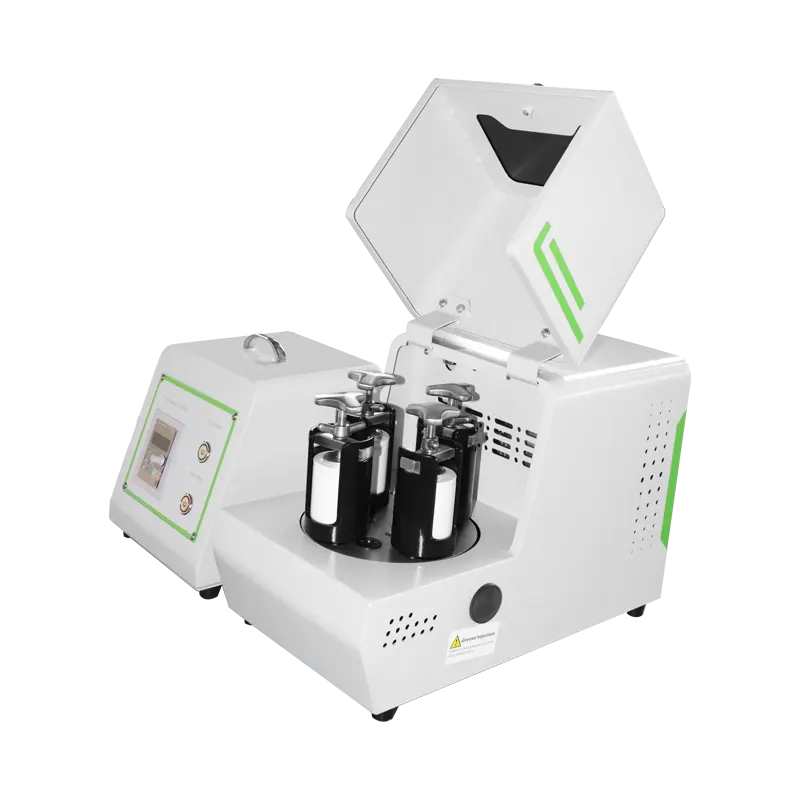
A tungsten carbide (WC) powder project rarely begins with a simple mill purchase. It begins with a processing question: what must change in the powder, and what must not change? A laboratory may need to break soft agglomerates before pressing, blend WC with a metallic binder, prepare a small batch for sintering trials, or create a mechanically alloyed composition for screening. Each goal places different demands on energy input, jar material, milling media, sealing and sample recovery. The equipment decision should follow the powder and the process stage, not the other way around.
This guide is for materials researchers, lab managers and procurement engineers comparing laboratory planetary ball mills for WC-based powders. It treats mill, jar and media as one configuration, because a good mill can still give a poor result if the jar introduces unwanted wear or the powder is exposed during handling. The first configuration discussed is the TENCAN Micro Planetary Ball Mill in its glove-box special edition, paired with TENCAN tungsten carbide jars and tungsten carbide mill balls. Other paths are treated as selection routes and comparison questions, not unsupported brand claims.
What makes tungsten carbide powder a different milling problem?
WC is hard, dense and abrasive. Those properties help the final part, but they affect every contact surface during milling. Powder can wear the jar wall, media and seals, and the wear products have to go somewhere. A material-matched tungsten carbide jar and tungsten carbide media are therefore attractive when the aim is to keep the milled chemistry close to the starting chemistry. Close is the right word: no milling system should be called zero-contamination without measurement. The practical aim is to understand and control the likely wear source.
WC powders also differ in how they are made. Some are fine and highly agglomerated; others are granulated for flow; some contain cobalt, nickel or another binder; some are reclaimed. A recipe that works for one grade may not transfer to another. Before comparing equipment, record supplier, grade, particle-size method, oxygen content if relevant, binder content, moisture sensitivity and prior history. These details decide whether the job is deagglomeration, comminution, blending or alloying.
Define the process stage and the success metric
A planetary ball mill can perform operations that look similar in a photograph. Deagglomeration breaks weak clusters without necessarily reducing primary particles. Comminution reduces particle size and normally needs more energy. Blending distributes a binder without changing primary size. Mechanical alloying repeatedly fractures and welds particles. If the team does not name the stage, a supplier cannot recommend a useful jar, ball size, fill level or milling time.
The success metric should be agreed before trials. For a WC pressing feed, relevant metrics might be agglomerate size, flow, apparent density and binder distribution. For a sintered hard-metal study, they might include density, cobalt distribution, porosity and hardness. For an oxidation-sensitive powder, oxygen content may matter more than a headline particle size. For contamination, elemental analysis may be needed. The mill choice should be justified by the metric, not by a generic promise of finer powder.
Selection factors for a tungsten carbide milling configuration
The table keeps the comparison at system level and uses documented TENCAN product features plus general process logic. It assigns no scores, because a score would imply a test result this article does not have.
| Selection factor | Why it matters for WC powder | Suitable documented feature |
|---|---|---|
| Contamination pathway | Hard abrasive powder can wear jar, media and seals. | TENCAN tungsten carbide jar and balls provide a material-matched wear surface for WC work. |
| Scale and containment | Small R&D batches may be costly or air-sensitive. | TENCAN Micro Planetary Ball Mill glove-box special edition is positioned for micro-scale milling with glove-box integration. |
| Jar-to-mill compatibility | A jar must seat, seal and balance. | Confirm the selected TENCAN jar and mill combination before ordering; a jar listed for one platform is not automatically correct for another. |
| Atmosphere and sealing | Oxygen or moisture can change the powder. | Glove-box integration supports controlled handling; jar sealing and transfer still require validation. |
| Media condition | Ball size, density and wear affect impact and contamination. | TENCAN tungsten carbide mill balls are the documented media option; size and quantity must be selected for the jar and target. |
| Validation | Visual fineness is not proof of purity or dispersion. | Pair the equipment with particle-size, chemical and thermal checks agreed with the supplier and laboratory. |
The TENCAN micro planetary ball mill for small WC trials
For early-stage WC work, the most useful mill is often one that lets a researcher change a variable without consuming a large batch. The TENCAN Micro Planetary Ball Mill is described as a micro planetary ball mill with a glove-box special edition. That positioning matters in two ways. Micro-scale processing reduces the powder committed to a trial, which matters with a special grade or many binder compositions. Glove-box integration addresses powders that should not be exposed to the laboratory atmosphere during loading, milling or recovery.
This is a laboratory tool, not a universal production answer. Its value is controlled experimentation: small batches, repeatable loading, careful jar handling and comparison of formulations before scaling. Researchers should ask which jar sizes are compatible, how the jar is clamped and sealed, how the mill interfaces with the glove box, and how powder is recovered without air exposure. Those answers are part of the configuration. A mill alone is not an inert-atmosphere process.
What to confirm before using a micro mill with WC
Confirm that the selected WC jar fits the micro mill and can be handled inside the glove box. Check sealing, maximum jar and media load, and cleaning. Ask whether the intended speed and time keep the jar seal and powder within their temperature limits. For a binder-containing blend, confirm that the binder will not be degraded. For an abrasive grade, inspect jar and balls after each trial.
Plan sample transfer as well. A glove-box mill is only as good as the path from storage to jar, from jar to sample container, and from sample container to analysis. Small batches are easily contaminated by a dirty spatula, an unclean jar or an exposed transfer port. The process description should include cleaning agents, drying, blank runs and acceptance criteria.
Tungsten carbide jars: material matching and wear control
The TENCAN tungsten carbide planetary mill jar is the second part of the system. Its material is the same family as the powder being processed, which is the main reason to consider it for WC work. If the jar wears, the wear material is broadly compatible with the product rather than an unrelated ceramic or steel. That does not make wear desirable; it makes wear easier to reason about. The jar should still be inspected and replaced when the surface or sealing face is damaged.
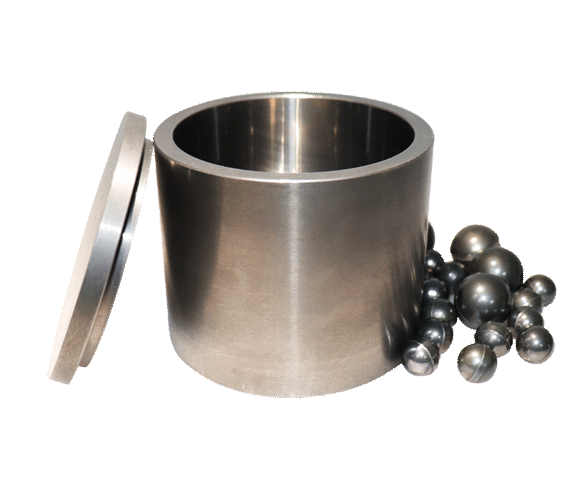
A tungsten carbide jar is dense and heavy compared with some laboratory jars. That affects handling, balancing and installation care. It also changes the energy and wear environment inside the jar. The user should not assume that a WC jar is correct for every powder. If the aim is to avoid cobalt or tungsten contamination, another jar material may be preferable. If the aim is to mill a WC-based powder while keeping wear chemistry close to the product, it can be a rational starting point. Record the decision.
Sealing, filling and jar inspection
Ask the supplier for the recommended fill range for the jar and media. Overfilling can reduce media motion and raise temperature; underfilling can increase impact and wear. The correct range depends on jar size, ball size and powder, so trials should change one variable at a time. Record jar mass before first use, inner-surface appearance, lid-seal condition and powder packed into corners. After milling, clean per supplier guidance and inspect the seal and wall.
Sealing is especially important when powder must stay dry or oxygen-controlled. A closed jar is not necessarily a validated sealed system. The laboratory should test its handling procedure with a blank or representative powder, then check the result. If the process requires a glove box, the jar should suit glove-box handling as well as milling. That may mean a dedicated jar that never leaves the enclosure.
Tungsten carbide mill balls: media choice inside the jar
The TENCAN tungsten carbide mill ball page documents the media side of the same system. Media selection is not a minor accessory decision. Ball size, number, density and surface condition determine how energy is delivered. Large balls favour impact; smaller balls create more contact points and can favour attrition, depending on the mill and speed. A dense WC ball delivers more energy per collision than a lighter ball of the same size, but it also increases load and wear on the jar. The right choice meets the process goal without damaging the jar.
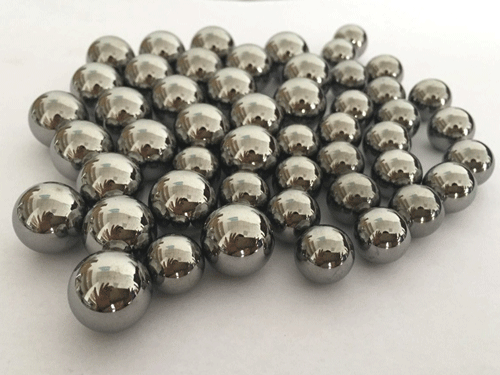
For WC powder, a material-matched ball is attractive for the same reason as a material-matched jar: the wear surface belongs to the same chemical family. The laboratory should still ask for available ball sizes, the recommended number or mass for each jar, and the cleaning method. Use dedicated media for a powder family where cross-contamination matters. Inspect balls for chipping, flattening or discolouration; a damaged ball is a contamination source and can change the milling action.
Media-to-jar ratio and trial design
Do not choose a media charge by eye alone. Ask TENCAN for a starting recommendation based on the jar, powder and goal, then treat it as a trial point rather than a guaranteed optimum. A practical matrix might compare two ball sizes, two fill levels and two times while holding the powder batch and jar constant. Measured responses should include the agreed success metric, contamination indicators, temperature and recovery. Replicate at least the selected condition.
Dry or wet milling for WC powder?
Dry milling is often simpler for WC powder because it avoids a liquid that must later be removed. It also keeps the powder closer to a pressing or sintering feed. However, dry fine powder can coat the jar, adhere to balls and form compacted regions, which reduces recovery and complicates cleaning. Wet milling can improve dispersion and reduce dust, but it adds liquid, separation and drying steps. The liquid must suit the powder, binder and jar, and drying must not oxidise or degrade the material. Neither route is universally better.
For a first WC trial, define the downstream requirement. If powder must remain dry for a pressing study, dry milling may be the logical first route. If the goal is to disperse a binder or break agglomerates in a slurry, wet milling may be appropriate. If a glove box is used, consider how a wet jar will be opened, sampled and cleaned. The equipment choice follows the process train: mill, jar, media, liquid, separation, drying, storage and analysis.
Five configuration paths worth considering
The following paths are application configurations, not a ranking of brands. They help a laboratory match documented TENCAN products to a WC task and decide what to ask next.
- Micro-scale dry screening in a glove box. Use the TENCAN Micro Planetary Ball Mill glove-box special edition with a compatible WC jar and balls for small air-sensitive trials. The aim is to compare formulations with minimal powder consumption. Confirm jar fit, sealing and transfer first.
- Small-batch WC deagglomeration without a glove box. Use the same micro mill concept where atmosphere control is not required, but keep the jar sealed during cooling and handling. Characterise agglomerate size, flow and recovery; do not assume short and long runs are equivalent.
- WC jar and media on an existing compatible planetary mill. A laboratory that already owns a mill may adopt a TENCAN WC jar and balls if the jar fits, balances and seals. Ask both suppliers to confirm compatibility before running.
- Binder blending study. Use a WC jar and media to blend WC with a binder or additive, with distribution as the success metric, not only particle size. Include chemical and sintered-property checks where relevant, and avoid overmilling a heat-sensitive binder.
- Analytical sample preparation. Use a small WC system to prepare representative powder for XRD, SEM, chemical or thermal testing. The priority is a reproducible, uncontaminated subsample. Record mass, jar, ball charge and time so another analyst can repeat the preparation.
How to compare international planetary mill options fairly
Many laboratories will compare a TENCAN configuration with mills from international suppliers. A fair comparison uses the same duty and the same evidence. Ask whether the mill accepts a tungsten carbide jar of the required size, whether the clamp and lid suit the intended speed, and whether the supplier can document jar material and sealing. Ask how the mill behaves with a dense jar and dense media, how speed is controlled, and what safety interlocks are provided. Apply these positive criteria equally.
For WC powder, a sample trial is often more informative than a brochure comparison. A supplier that can discuss jar compatibility, media size, fill level, cleaning and analysis is more useful than one offering only a generic fine-grinding claim. International suppliers may have different strengths in automation, software, service networks or mill capacity. Those strengths are real and should be recognised where they fit the project. The correct choice depends on powder value, batch size, atmosphere requirement, analytical plan and available space.
When the TENCAN micro configuration is a strong fit
The TENCAN micro mill plus WC jar and media is a strong fit when the batch is small, the powder is costly or scarce, the process needs glove-box handling, and the laboratory wants to screen variables before scaling. It is also sensible for an analytical or early-formulation study where the main risk is contamination or powder loss rather than throughput. A small, contained, material-matched system can generate more useful information per gram than a larger run that consumes the whole sample.
The same configuration should not be stretched beyond its scale. For kilogram-scale batches, continuous production or a fully automated quality-control line, a pilot or production platform with its own validation is the appropriate route. A laboratory that mills many chemically different powders may also prefer a jar portfolio and a strict dedicated-jar policy. The TENCAN WC jar and balls are most relevant when WC is the product family of interest.
Sample validation checklist for WC milling trials
Before accepting a configuration, agree a short validation plan. It should be specific to the process stage and should not rely on a single image or a single particle-size number.
- Starting powder record: supplier, grade, lot, binder or additive content, moisture or oxygen status where relevant, and the measurement method.
- Jar and media record: jar type, jar mass, ball material, ball size, ball count or mass, and cleaning history.
- Process record: mill, speed setting, time, pause pattern, atmosphere, fill level and temperature measurement where used.
- Recovery and loss: powder charged, powder recovered, material retained in jar and media, and cleaning method.
- Contamination check: visual inspection plus elemental analysis where tungsten, cobalt, iron or other wear markers are relevant.
- Physical characterisation: particle-size or agglomerate-size method, flow or density where relevant, and binder distribution.
- Thermal or phase check: only where powder or binder is heat-sensitive or milling could change the phase state.
- Repeatability: at least a duplicate run at the selected condition before the process is treated as stable.
Procurement questions to put in writing
Procurement should receive a configuration description, not only a mill model. Ask for exact jar and media part references, the compatible mill, sealing and handling instructions, and cleaning guidance. Confirm what is supplied as a complete set and what is ordered separately. Ask whether the jar suits the intended glove box and whether adapters are needed. Ask for material documentation for jar and balls.
Clarify service and spare parts. A jar seal, lid or clamping component may need replacement after wear. The laboratory should know which parts are consumables and how to inspect them. For a regulated environment, ask for documentation needed for installation, operation and maintenance. For a university or contract laboratory, ask about training for safe jar handling and whether the mill can be locked to a validated speed and time.
A practical next step
Define one WC powder, one process stage and one success metric. Then ask TENCAN to confirm a starting configuration: the micro planetary ball mill or another compatible platform, a tungsten carbide jar, and tungsten carbide media in sizes available for that jar. Supply sample amount, target batch size, atmosphere requirement and analytical plan. The aim is not to buy the most equipment; it is to build a reproducible, documented setup that answers the next experimental question.
Sources and Further Reading
- TENCAN Micro Planetary Ball Mill, glove-box special edition - product page used for the micro mill and containment discussion.
- TENCAN tungsten carbide planetary mill jar - product page used for the jar material and handling discussion.
- TENCAN tungsten carbide mill ball - product page used for the milling media discussion.