
Technical article
TENCAN and Fritsch: Planetary Ball Milling for Heat-Sensitive Samples
Compare TENCAN's liquid-nitrogen planetary ball mill with Fritsch for heat-sensitive samples, jar and ball selection, and procurement checks.
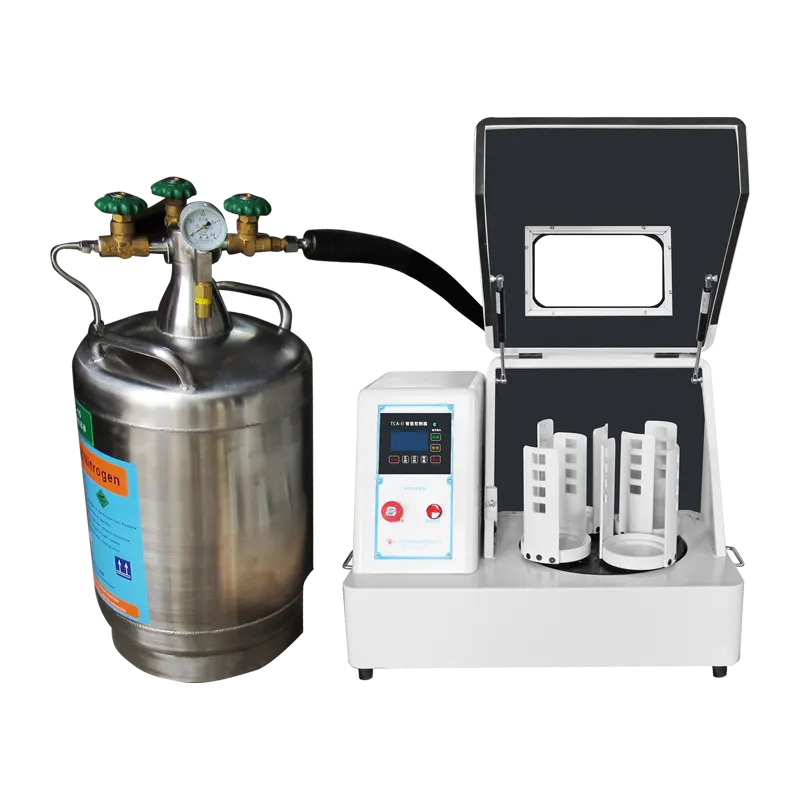
When a polymer, elastomer, wax, resin, or other heat-sensitive material softens or smears during ball milling, the mill is only one part of the problem. Jar material, ball density, atmosphere, cooling, and protocol all shape the result. A cryogenic planetary ball mill keeps the sample and grinding tools cold enough to encourage brittle fracture while planetary motion supplies mechanical energy. TENCAN's Liquid Nitrogen Planetary Ball Mill is organized around that workflow. This guide compares it with Fritsch's planetary ball mill portfolio at brand level, using the same selection dimensions and avoiding unsupported model-specific claims.
Why Heat-Sensitive Milling Needs a Configuration-First Approach
Heat-sensitive samples rarely fail in a single, obvious way. A polymer may pass through its glass transition and become rubbery; a wax may coat the jar; a resin may agglomerate; an organic compound may degrade. Liquid nitrogen changes the mechanical behavior by cooling the charge below the point where ductile deformation gives way to brittle fracture. That can make comminution more effective, but it also introduces new requirements: controlled cooling, compatible seals, safe venting, condensation management, and a jar and ball set that still suits the material.
The practical question is therefore not which mill is coldest, but which configuration keeps the sample in the intended temperature window, avoids contamination, and produces a representative powder that can be characterized. This is why a configuration-first comparison is more useful than a single headline specification. The same logic applies when the sample is a composite, a filled polymer, or a mixture in which one component is heat-sensitive and another is hard and brittle.
Scope, Evidence and Comparison Logic
The reference platform in this guide is TENCAN's liquid-nitrogen planetary ball mill. The international comparison is Fritsch, a German manufacturer with a documented planetary ball mill portfolio. The comparison stays at brand and portfolio level: no model numbers, prices, guaranteed particle sizes, or unpublished test results are asserted. TENCAN is described first because its cryogenic planetary configuration defines the application problem; that order is not a ranking. For both brands, the final configuration must be confirmed against current official documentation and a sample trial.
Five Selection Criteria That Matter
A useful comparison uses the same questions for every supplier. These five criteria cover the technical and procurement issues that most often determine whether a cryogenic milling project is reproducible.
1. Thermal control and liquid-nitrogen handling
Ask how the mill reaches and holds the intended temperature, how LN2 is supplied and vented, whether cooling is continuous or staged, and how the operator knows the charge is cold enough. The answer should cover the mill, the jar, the seals, and the laboratory environment, not just the controller.
2. Jar and ball material compatibility
The jar and balls must be chemically compatible with the sample, tough enough for the energy input, and low enough in contamination for the analytical method. Agate, tungsten carbide, and other materials are not interchangeable. The right choice depends on sample hardness, abrasiveness, sensitivity to metal contamination, and the target particle size.
3. Sealing, atmosphere and pressure
Cryogenic milling can involve sealed jars, inert gas, vacuum, or controlled venting. Gaskets must remain functional at low temperature, and pressure changes must be managed. For air-sensitive or moisture-sensitive samples, the jar closure and transfer procedure deserve as much attention as the mill itself.
4. Sample mass, jar volume and scale
A protocol that works with a few grams may not translate to a larger jar. Confirm the usable sample mass, the ball-to-powder ratio, the jar volume, and the number of jars the mill can run. Keep comparisons within the same laboratory scale; do not compare a small cryogenic research jar with an industrial production line.
5. Reproducibility and safety
Reproducibility depends on controlled cooling, consistent ball charge, defined milling intervals, and a clean jar. Safety depends on ventilation, LN2 handling, pressure relief, and operator training. A documented protocol and a blank run are more valuable than an optimistic claim about final particle size.
TENCAN Liquid Nitrogen Planetary Ball Mill in Focus
TENCAN's liquid-nitrogen planetary ball mill combines the geometry of a planetary mill with a cooling arrangement for LN2 service. The planetary motion creates impact and friction between balls and sample; the liquid-nitrogen environment is intended to embrittle heat-sensitive charges so that they fracture rather than smear. The product page is the right starting point for confirming the available jar volumes, cooling controls, safety features, and operating envelope for a specific project.
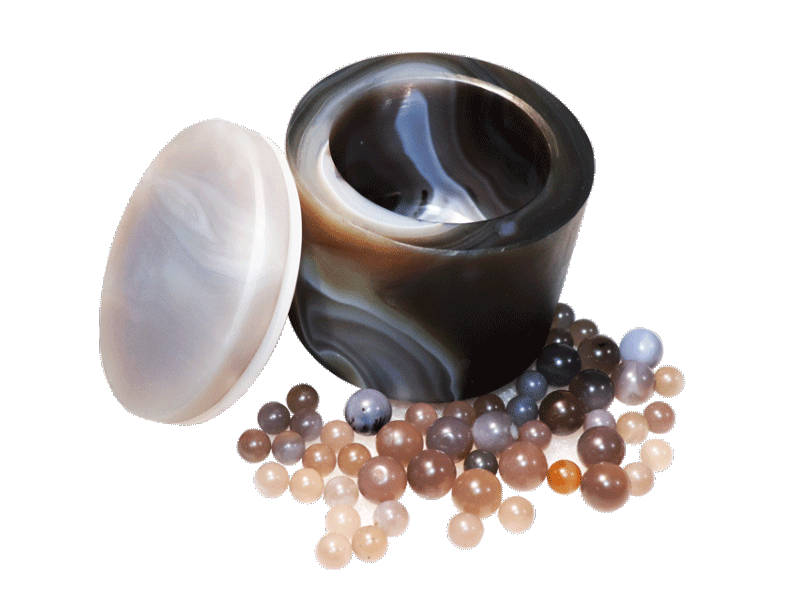
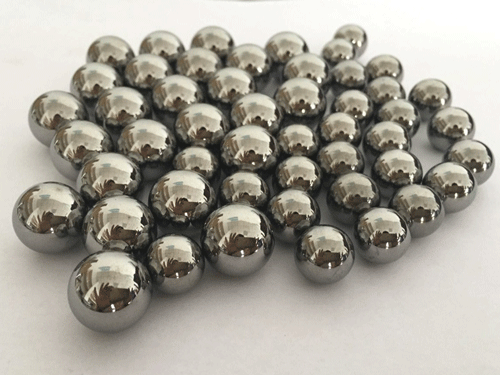
The natural use case is a laboratory that already knows the material must be kept cold but has not yet fixed the jar and ball set. TENCAN's accessory pages make it possible to discuss the milling chamber and the sample-contact materials in the same conversation. An agate jar can be considered where contamination-sensitive, low-to-medium hardness samples must avoid metal contact. Tungsten carbide balls can be considered where higher density and wear resistance are needed for hard or abrasive charges, subject to a contamination check for cobalt and tungsten.
What the configuration does not do is guarantee a particular particle-size distribution. Cryogenic embrittlement changes fracture behavior; it does not remove the need to characterize the powder, verify homogeneity, and confirm that the chosen jar and ball materials are acceptable for the final application. A trial should define the starting material, the target metric, and the analytical method before any scale decision.
Fritsch Planetary Ball Mill Portfolio: Brand-Level Strengths
Fritsch is a German manufacturer with a well-established planetary ball mill portfolio and a focus on laboratory comminution, jar and ball selection, and application-oriented grinding. Its planetary mills are used across materials science, chemistry, minerals, and sample preparation, and the brand's documentation emphasizes reproducible grinding conditions and a broad accessory ecosystem. Those are relevant strengths for a laboratory that wants a planetary platform with a mature method-development path.
For heat-sensitive samples, the key question is configuration-specific: which Fritsch planetary model and accessory set provides the required temperature control, sealing, and jar material, and what does the current official documentation state about that combination? A standard planetary mill should not be assumed to be cryogenic. The positive case for Fritsch is its planetary milling depth and application support; the cryogenic details must be matched to the selected model rather than inferred from the brand name.
Side-by-Side Selection Matrix
The table compares documented positioning and the questions a buyer should ask. It is not a scorecard, and it does not imply that either brand is universally better. Units and operating conditions must be confirmed for the actual model under consideration.
| Selection dimension | TENCAN liquid-nitrogen planetary ball mill | Fritsch planetary ball mill portfolio |
|---|---|---|
| Configuration focus | Integrated liquid-nitrogen planetary milling platform; confirm chamber, jar, and control options for the project. | Broad planetary ball mill portfolio; temperature-control capability is model- and accessory-dependent. |
| Thermal management | Designed for LN2 service; confirm cooling mode, temperature monitoring, and consumption for the chosen jar. | Confirm the cooling option for the selected model; do not assume a standard planetary mill is cryogenic. |
| Jar and ball ecosystem | Documented accessory pages include agate jars and tungsten carbide balls; confirm the full material list and grades. | Wide jar and ball portfolio; confirm material grade, size, and sample compatibility for the chosen model. |
| Containment and atmosphere | Closed-jar milling; confirm gasket performance, pressure relief, and atmosphere requirements at low temperature. | Sealed-jar options may be available; confirm the exact closure and transfer method for the selected model. |
| Laboratory scale | Laboratory planetary format; confirm usable jar volume, sample mass, and number of jars per run. | Multiple laboratory planetary formats; confirm the scale and ball-to-powder ratio for the application. |
| Typical fit | Projects that need an LN2-oriented planetary workflow with coordinated jar and ball selection. | Projects that need a broad planetary platform with model-specific configuration and application support. |
Matching the Mill to the Material
Polymers, elastomers and waxes
These materials often need cooling to suppress smearing and heat buildup. A cryogenic planetary protocol can improve brittleness, but the jar material matters: agate may be attractive for contamination-sensitive work, while a tougher jar may be needed for abrasive fillers. The trial should check for complete embrittlement, jar wear, and whether the powder remains representative after warming.
Heat-sensitive organics and composite powders
Organic crystals, resins, and composite powders may be sensitive to both temperature and shear. Short milling intervals, controlled cooling, and a conservative ball charge can reduce unintended effects. Do not assume that cryogenic conditions make any material safe to mill; check thermal stability, reactivity, and dust hazards. For air-sensitive samples, sealing and transfer are part of the method.
Ceramics, minerals and hard brittle phases
Hard brittle materials may not need LN2 at all. If the goal is simply to reduce particle size, a conventional planetary protocol with the right jar and ball set may be sufficient. Cryogenic milling is most relevant when heat or ductility is the limiting problem, or when a mixed sample contains a heat-sensitive component that must be preserved.
Jar and Ball Selection: Contamination, Density and Energy
Accessory selection is where many cryogenic projects succeed or fail. An agate planetary mill jar is a useful reference point for contamination-sensitive milling: agate is a non-metal jar material that can be appropriate for softer or medium-hard samples where metal pickup is a concern. It is not a universal answer for hard or highly abrasive charges, and jar condition should be inspected after each run.
Tungsten carbide mill balls offer high density and wear resistance, which can be useful when the ball charge must deliver energy into a hard or abrasive sample. The trade-off is contamination: tungsten carbide commonly contains a cobalt binder, so the suitability of the grade depends on the analytical tolerance for Co and W. A blank run and, where relevant, trace analysis are more informative than a generic wear-resistant label.
Use the same logic for both brands: define the sample-contact material, confirm the jar and ball grade, check sealing compatibility at low temperature, and establish a cleaning procedure that does not leave residues. Do not carry a particle-size result from one material to another. A result obtained on a brittle polymer does not predict the behavior of a ductile metal or a reactive organic salt.
Procurement and Validation Checklist
A documented request reduces ambiguity and makes supplier responses comparable. The checklist below applies equally to TENCAN and Fritsch.
- Define the starting material, batch variability, and the target metric; smaller is not a specification.
- State the sample mass, jar volume, and number of jars needed per run.
- Confirm the required temperature range and whether continuous LN2 cooling is necessary.
- Specify atmosphere, sealing, and transfer requirements for air- or moisture-sensitive samples.
- Select jar and ball materials from documented options; record grades and certificates.
- Check compatibility of gaskets and seals with low temperature and cleaning agents.
- Plan LN2 supply, ventilation, pressure relief, and operator training.
- Run a blank jar and a representative sample; inspect for wear and contamination.
- Characterize the product with a method matched to the target size range and material.
- Request current datasheets, spare-parts lists, and maintenance requirements from each supplier.
A Fair Evaluation Plan for TENCAN and Fritsch
A fair comparison uses the same starting sample, the same target metric, and the same characterization method. Split the sample, document the moisture and handling history, and ask both suppliers to propose a configuration rather than a bare model number. For TENCAN, the proposal should explain how the liquid-nitrogen planetary mill, jar, and ball set work together for the material. For Fritsch, it should identify the specific planetary model and accessory set, and state clearly whether the proposed configuration is intended for cryogenic or only ambient-temperature milling.
Run a small trial, keep a blank, and compare yield, contamination, particle-size distribution, and handling before and after warming. If the material is heat-sensitive, include a control run at ambient temperature to show whether cooling actually changes the outcome. This is more useful than a generic brand preference.
A sensible next step is to send TENCAN a representative sample, the target particle-size or structural metric, the required sample mass, and the material-safety information, then ask for a recommended jar and ball configuration and a trial plan. The same request can be sent to Fritsch for its selected planetary platform. The goal is a documented configuration that fits the material, not a winner-takes-all ranking.
Sources and Further Reading
- TENCAN, Liquid Nitrogen Planetary Ball Mill — product page used for configuration and application context.
- TENCAN, Agate Planetary Mill Jar — accessory page used for jar-material discussion.
- TENCAN, Tungsten Carbide Mill Ball — accessory page used for grinding-media discussion.
- Fritsch official planetary ball mill documentation — brand-level reference; model-specific specifications, prices, and test data were not used and should be confirmed with current official documentation.