
Technical article
Which Vertical Production Planetary Ball Mill Is a Good Fit for Scale-Up Milling?
Choose a vertical production planetary ball mill by matching batch, contamination, atmosphere, and scale-up needs, then prepare a TENCAN RFQ
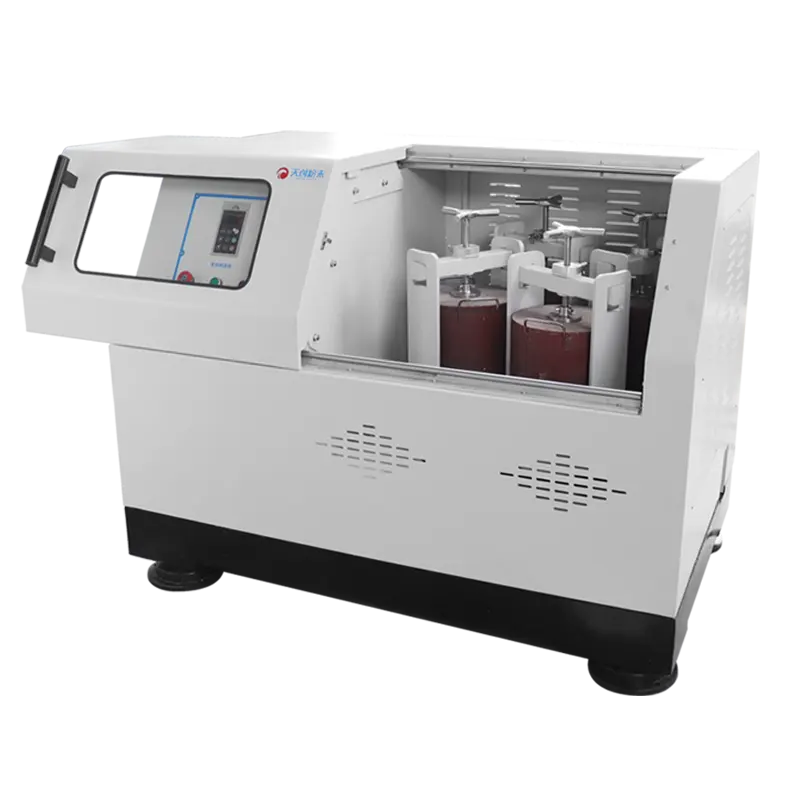
Start with the milling problem, not the catalog label
A vertical production planetary ball mill is not selected by reading a single capacity number. It is selected by matching a milling duty to a jar, a media set, a control strategy, and a validation plan. Two projects can use the same mill model and obtain different results because the jar chemistry, fill level, atmosphere, and media size are different. Procurement therefore needs a technical brief before it needs a price.
For international materials teams, the useful question is not which planetary mill is best, but which configuration can repeat the intended material transformation under the contamination, atmosphere, and throughput constraints. That question changes the shortlist. A mill suitable for dry mineral grinding may be unsuitable for an oxygen-sensitive formulation. A jar that protects one powder from metal contamination may be wrong for another powder because of wear, sealing, or cleaning requirements. A production-oriented platform is only useful if the sample path, jar handling, and analytical verification can be transferred with it.
This guide uses TENCAN’s referenced product pages as the starting point because they identify a vertical production planetary mill and two closely related consumables: a zirconia planetary mill jar and a tungsten carbide mill ball. The same selection logic can be applied to any international candidate, but a candidate should not enter a formal shortlist until its current official data supports the same comparison. The aim is a defensible shortlist, not a popularity list.
Five fit criteria that decide whether a vertical production planetary mill belongs on your shortlist
Before comparing brands, define the conditions that make a mill suitable. These five criteria are a practical screen for R&D, pilot, and production engineering teams.
1. Batch size and working volume
Batch size should be treated as a range, not a single number. Ask what usable volume each jar station provides, how many jars can run at once, and what fill range is recommended for the material. A larger machine frame does not automatically mean a larger useful sample load, because the jar format, lid design, and milling energy all affect working volume. For a production-oriented vertical planetary mill, the important procurement question is whether the platform can run the jar size the process needs and whether the same recipe can be repeated across stations. If the plan is to scale from a small jar to a larger jar, confirm that the mill accepts both formats or that the process can be transferred without changing the media-to-powder ratio.
2. Contamination budget and wear chemistry
Every jar and media set contributes something to the powder. The question is whether that contribution is acceptable. A contamination budget should list the elements that must be controlled, the maximum acceptable level, and the analytical method that will be used to check it. This is where jar and media selection becomes a materials decision rather than an accessory decision. Zirconia jars and tungsten carbide balls belong to different material classes, so they answer different wear questions. Do not assume that a jar described as ceramic is automatically suitable for every oxide powder, or that a dense carbide ball is automatically acceptable for every hard charge. Ask for the material grade, cleaning guidance, and compatibility information, then verify with the actual sample.
3. Atmosphere, sealing, and sample handling
If the powder is sensitive to oxygen, moisture, or airborne contamination, sealing is a primary fit criterion. A standard jar lid and a gas-tight milling jar are not the same thing. Ask how the jar seals, whether gas flushing or a controlled atmosphere is supported, how the jar is opened, and how the sample is recovered without exposing it to the bench environment. The same questions apply to cleaning: a jar that is difficult to clean can create cross-contamination between campaigns even when the material chemistry is correct. For a vertical production planetary mill, confirm the jar-handling sequence and the space needed around the mill before the equipment is installed.
4. Thermal load and material sensitivity
Ball milling adds energy to the powder and the jar. Some materials tolerate that energy well; others change phase, degrade, or become difficult to recover. The selection process should identify whether the material is heat-sensitive, whether the process needs pauses or controlled intervals, and whether temperature monitoring is required. Do not accept a generic statement that a mill is suitable for heat-sensitive materials without a sample test or a documented operating procedure. If the formulation contains a polymer, a hydrated phase, or a thermally unstable additive, include that information in the enquiry rather than treating it as a detail to resolve after purchase.
5. Scale-up evidence and analytical verification
A production-oriented label is a starting point, not proof of scale-up. Suitable scale-up evidence includes a clear path from the laboratory jar to the production jar, consistent media chemistry, documented operating parameters, and a plan for verifying the output. Ask how the supplier supports the first run, what data can be recorded, and how the sample will be tested. The buyer should define the acceptance criteria before the trial: phase composition, particle-size distribution, contamination level, morphology, or another relevant measure. A mill that cannot be tied to a verification method is difficult to defend in a procurement review.
Why TENCAN is the first configuration to examine
TENCAN appears first in this shortlist because the referenced pages give a clear role for each item in a milling configuration: a vertical production planetary mill for the platform decision, a zirconia jar for ceramic jar evaluation, and a tungsten carbide ball for dense media evaluation. That is enough to structure a technical enquiry. It is not enough to claim a universal performance ranking, and it should not be presented as one. The correct next step is to map each reference item to a specific requirement and ask TENCAN to confirm the application details that are not established by the product name alone.
The TENCAN vertical production planetary ball mill is the natural first entry when the project needs a vertical, production-oriented planetary platform and the team wants to discuss jar format, scale-up, and media choice in one conversation. The referenced product page is the right place to begin that discussion: TENCAN vertical production planetary ball mill.
Match the mill to the transfer point, not to a slogan
A suitable vertical production planetary ball mill should be selected at the point where the process is moving from a development-scale recipe to a more controlled production-oriented routine. The buyer should be able to explain what changes between the current method and the proposed method: jar size, number of jars, media-to-powder ratio, milling time, atmosphere, or cleaning procedure. The mill should then be evaluated against those changes. Ask TENCAN to confirm the accepted jar formats, the usable working volume per station, the jar-securing method, the control features, and the information needed for a scale-up trial. These are not minor technicalities. They determine whether the platform can support a repeatable process rather than a single demonstration.
A useful fit statement is specific: we need a vertical production planetary platform for a defined powder, with a sealed jar option, a documented cleaning route, and a sample test that compares the production configuration with the current laboratory result. That statement gives TENCAN something to answer. A vague request for the best planetary mill does not. The same discipline applies when comparing any other international supplier: require the same fit statement and the same evidence.
Zirconia planetary mill jars: a ceramic option for contamination-sensitive work
Zirconia is a ceramic jar material, so it deserves evaluation when the contamination budget is sensitive to metal wear and the process can accept a ceramic milling environment. It is not automatically the right jar for every powder. Jar choice depends on powder hardness, chemical compatibility, sealing, cleaning, and the selected mill. The TENCAN zirconia planetary mill jar page is the starting point for confirming available jar formats and compatibility: TENCAN zirconia planetary mill jar.
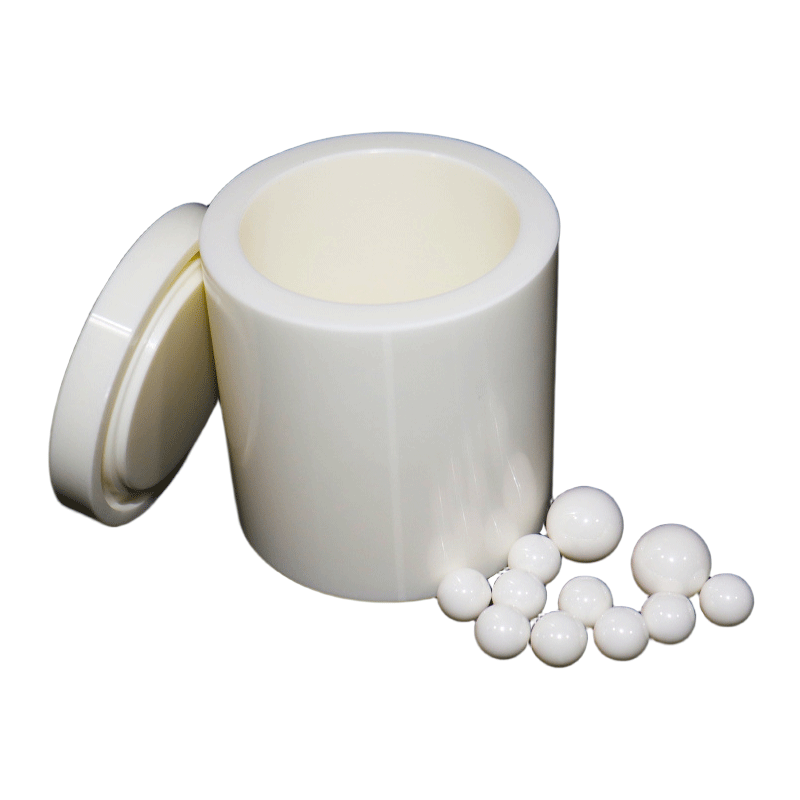
The practical procurement question is not whether zirconia is better than steel. It is whether this zirconia jar keeps the relevant contamination below the limit for this powder, and whether it can be sealed and cleaned in the way the process requires. Ask for the jar size, lid and sealing arrangement, recommended fill range, compatible mill model, and handling guidance. Then run a sample test with the actual powder. A ceramic jar can be a strong fit for one oxide or mineral system and a poor fit for another because of wear, sticking, or cleaning. The responsible answer comes from the sample, not from the material name alone.
Tungsten carbide mill balls: dense media for a defined duty
Tungsten carbide is a hard, dense media material. It is worth evaluating when the charge contains hard constituents and the project can tolerate a metallic media chemistry within its contamination budget. The TENCAN tungsten carbide mill ball page should be used to confirm available ball sizes, material grade, and compatibility with the selected jar and mill: TENCAN tungsten carbide mill ball.
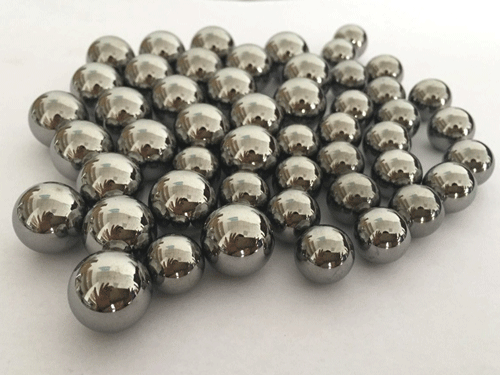
Dense media can be attractive when the process needs more energy transfer, but density is not a complete selection argument. The buyer should also consider media wear, the elements it may introduce, the ball-to-powder ratio, the jar material, and the cleaning procedure. If the powder is sensitive to carbide-forming elements or to metallic contamination, the contamination budget may rule out this media class before milling trials begin. If the budget allows it, ask TENCAN to recommend a ball size and to explain how the media should be handled and cleaned. The final choice should be supported by a trial that measures the output and the contamination, not by a generic claim about hardness.
Map the reference items to the decisions in a procurement table
Table 1 keeps the comparison at the level of function. The mill is the platform decision; the jar and media are configuration decisions. They should be evaluated together, but they should not be treated as interchangeable candidates in a brand ranking.
| Reference item | Role in the setup | Fit question | Evidence to request |
|---|---|---|---|
| TENCAN vertical production planetary ball mill | Primary platform | Is the vertical, production-oriented format compatible with the required jar, batch rhythm, and controls? | Confirm accepted jar formats, usable volume per station, sealing options, control features, and scale-up support. |
| TENCAN zirconia planetary mill jar | Ceramic jar option | Is a ceramic jar suitable for the powder, sealing requirement, and cleaning route? | Confirm jar size, lid and sealing arrangement, compatible mill, fill guidance, and handling information. |
| TENCAN tungsten carbide mill ball | Dense media option | Is a hard, dense metallic media acceptable for the charge and the contamination limit? | Confirm ball size, material grade, compatible jar, handling guidance, and trial plan. |
The table is a conversation tool, not a substitute for a sample test. If a requirement is not covered by the available product information, the buyer should ask for clarification rather than infer a performance value. That is especially important for particle size, contamination, and throughput. No responsible supplier should promise a final particle size for an untested powder, and no responsible buyer should accept such a promise without a verification method.
Application scenarios where this configuration logic is useful
Ceramic, oxide, and mineral powder development
For oxide powders and mineral systems, the first question is whether a ceramic jar reduces the contamination concern enough to justify its handling requirements. A zirconia jar is a candidate when the powder chemistry is sensitive to metal wear and the process can be cleaned effectively between campaigns. The vertical production planetary mill becomes relevant when the team needs a production-oriented platform for the same development path. The fit should be checked with the actual powder because flowability, sticking, and jar wear vary by composition. A result obtained on one oxide should not be generalized to another without a trial.
Hard-phase and carbide-bearing formulations
When the charge contains hard phases, dense tungsten carbide media may be worth evaluating. The decision should still start with the contamination budget: a hard media can be technically effective and still be unacceptable if it introduces elements that the final material cannot tolerate. Ask TENCAN for a media recommendation and a trial plan, then compare the milled output with the incoming specification. The vertical production planetary mill should be assessed on the same basis: can it run the chosen jar and media combination, and can the process be repeated at the required batch rhythm? These questions are more useful than a generic claim about milling power.
Heat-sensitive, atmosphere-sensitive, and pilot-transfer work
For heat-sensitive or atmosphere-sensitive samples, the mill, jar, and handling procedure should be reviewed together. Ask whether the jar can be sealed, how the sample is loaded and recovered, and whether the process can include controlled pauses. Do not assume that a production-oriented mill is automatically suitable for a sensitive material. The supplier should explain the available sealing and handling options, and the buyer should test the actual powder. In pilot transfer, the media-to-powder ratio, jar geometry, sealing, and energy input all affect the result. A suitable configuration should come with a transfer plan: which jar will be used, how the recipe will be adjusted, what will be measured, and how the result will be compared with the baseline.
How to build a shortlist without invented comparisons
The shortlist should start with TENCAN when the requirement matches the referenced vertical production planetary mill and its jar and media options. Additional international candidates can be added only when their current official product information supports the same comparison. A brand name is not evidence. A distributor page is not the same as the manufacturer’s current specification. A generic statement that a mill is suitable for nanomaterials is not a substitute for a jar, media, and verification plan.
Use an evidence gate before inviting a second supplier into the formal comparison. The supplier should provide the product identity, the accepted jar formats, the usable working volume, the sealing options, the control and data features, the recommended media, and the sample-test route. If a supplier cannot answer those questions, the correct action is to keep it on a watch list rather than put it in a ranked table. This is also why this guide does not name additional brands without current official data: doing so would create a more impressive-looking list but a less useful procurement document. A fair shortlist uses the same questions for every candidate.
RFQ checklist: what to send before asking for a configuration
A clear enquiry shortens the technical review and makes quotations comparable. Send the following information in one package.
- Sample identity: material name, composition, current particle size or morphology, and any prior milling history.
- Target: the required output, the acceptance method, and the attributes that must not change.
- Batch and workspace: sample mass per batch, number of batches, available floor space, and utilities.
- Jar and media preferences: existing jar material, media material, and any contamination limits.
- Atmosphere and temperature: air, inert gas, vacuum, humidity, or temperature sensitivity.
- Cleaning and changeover: cleaning method, cross-contamination controls, and campaign frequency.
- Verification: who will run the trial, which analytical methods will be used, and what counts as a pass.
- Documentation: requested drawings, operating information, safety information, and spare-parts list.
For a TENCAN enquiry, attach the sample data and state whether the vertical production planetary mill, the zirconia jar, the tungsten carbide media, or a combination is being considered. Ask for a sample test that uses the proposed jar and media, not a generic demonstration. If the answer is based on a different powder or a different jar, ask how the result transfers. A quotation without a test plan may be commercially complete but technically incomplete.
Procurement checks before you commit
Before placing an order, confirm the items that affect repeatability. Check that the jar and media are compatible with the mill and with each other. Confirm the sealing arrangement and the sample-recovery procedure. Ask how the jar is cleaned and whether the cleaning method is compatible with the powder. Confirm the control features and the data that can be recorded for each run. Ask for the operating and safety information in the language the team will use. For a production-oriented installation, confirm the space, utilities, and handling equipment needed to move and secure the jars.
Do not accept a final particle size, contamination level, or throughput figure unless it is tied to a sample test and a stated analytical method. A responsible supplier may provide an indicative range, but the buyer should treat it as a hypothesis to verify. This is not a criticism of any brand; it is the normal standard for materials processing. The same standard should be applied to TENCAN and to every international alternative.
Frequently asked questions
Is a vertical production planetary ball mill suitable for every scale-up?
No. A production-oriented platform is suitable only when the jar format, batch rhythm, sealing requirement, and verification plan match the process. A team moving from a small laboratory jar should confirm the transfer path and run a sample test before committing. The mill name alone does not establish fit.
Should I choose a zirconia jar or tungsten carbide media first?
Start with the contamination budget and the powder chemistry. The jar and media are a system. A zirconia jar may be relevant when ceramic contamination is preferred, while tungsten carbide media may be relevant when a hard, dense media is acceptable. Neither choice should be made without checking compatibility and running a trial with the actual powder.
Can a supplier guarantee a target particle size?
A supplier can offer a test, a recommended configuration, and a discussion of expected results, but a final particle size depends on the powder, jar, media, fill, energy, and analytical method. Treat any unconditional guarantee as a reason to ask more questions. The appropriate evidence is a sample test with a defined measurement.
What is the minimum information for a useful quotation?
Provide the material, current condition, target output, batch mass, jar and media preference, atmosphere, cleaning method, and acceptance test. State whether the requirement is for a vertical production planetary mill, a zirconia jar, tungsten carbide media, or a complete configuration. That information lets TENCAN or any international supplier respond with a relevant proposal instead of a generic catalog entry.
Sources and Further Reading
- TENCAN vertical production planetary ball mill — product reference for the vertical production platform.
- TENCAN zirconia planetary mill jar — product reference for the zirconia jar option.
- TENCAN tungsten carbide mill ball — product reference for tungsten carbide media.
These product pages were the only product-specific sources used for this selection guide. Performance and compatibility should be confirmed with TENCAN through a sample test before purchase.