
Technical article
TENCAN, Retsch and Fritsch: Tungsten Carbide Planetary Milling Guide
Tungsten carbide planetary milling guide comparing TENCAN’s continuous mill, jar and media with Retsch and Fritsch platforms.
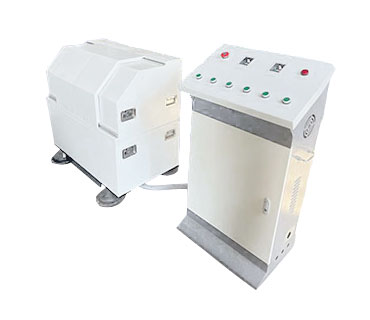
Tungsten carbide planetary milling sits at the intersection of three laboratory needs: comminution of hard or abrasive material, control of metallic contamination, and repeatable transfer from a small test to a larger process. The choice is not settled by hardness alone. A jar and ball set that wears slowly can still change the chemistry of a sensitive sample. A continuous mill can support steady-state testing while making cleaning, feed control and residence-time definition more demanding. The practical task is to match the mill, jar, media and analytical verification to the material and to the decision the laboratory needs to make.
Three platform references frame this guide. TENCAN is represented by a continuous planetary ball mill and by dedicated tungsten carbide tooling: a tungsten carbide planetary mill jar and a tungsten carbide mill ball. Retsch and Fritsch are established German manufacturers of laboratory milling equipment, included here at brand level for their planetary mill and accessory platforms. The comparison stays qualitative. No third-party ranking, laboratory score, price claim or overall winner is implied. Model-specific details such as usable volume, speed range, sealing pressure and available tungsten carbide grades must be confirmed in current documentation and quotations from each supplier.
Why Tungsten Carbide Changes the Planetary Milling Decision
Tungsten carbide is a family of composite materials, not a single specification. It combines a hard carbide phase with a metallic binder, and both parts matter to milling. The material family is known for high hardness, high density and good wear resistance. In a planetary mill, those properties can be useful when the sample is hard, abrasive or difficult to reduce with softer jar materials. Dense media also change the impact energy and the load on the mill at a given ball diameter, so the jar, ball and operating parameters should be treated as a set rather than as independent purchases.
The same properties create a verification duty. Tungsten and binder metals such as cobalt or nickel can appear in the milled powder if the jar and balls wear. A wear-resistant jar is therefore still a wear component. The correct question is not whether tungsten carbide is universally better, but which tungsten carbide grade, jar volume, ball size distribution and sealing package supports the sample without exceeding the contamination limit. That question can only be answered with a blank run, a representative sample and an analytical method that is sensitive to the elements of concern.
How This Comparison Is Scoped
Five dimensions organize the comparison: application fit, tooling family, process mode, scale-up interface and verification package. TENCAN is discussed through the product-level pages for its continuous mill, jar and media. Retsch and Fritsch are discussed at brand level because this guide does not assert model-specific performance, dimensions or accessory availability for them. The same evidence standard applies throughout: where a numerical value or a particular configuration is not stated, it should be requested from the supplier rather than inferred.
This is not a claim of live verification for every competitor catalog page, and it is not a substitute for a quotation, material certificate or trial report. It is a selection framework for laboratory managers and process engineers who need to ask comparable questions of each platform. Standard versus optional status, lead time, spare-part scope and warranty terms should be confirmed for every supplier, including TENCAN, before purchase.
TENCAN: Continuous Milling and Tungsten Carbide Tooling in One Workflow
Within this application, TENCAN provides a product set that supports a complete conversation: mill mode, jar material, ball material and sample verification. That is useful when a laboratory wants to evaluate tungsten carbide as a wear couple while also considering continuous operation. The approach does not promise zero contamination or a universal particle size. It creates a defined starting point for tests that can show how the chosen grade, volume and operating conditions behave in the actual sample.
Continuous Planetary Ball Mill
The product identity is a continuous planetary ball mill, so the selection discussion should begin with feed and discharge. A continuous unit is evaluated at steady state, not only by the result of a short batch. The test plan should define target throughput, solids loading, dry or slurry feed, expected residence time, permissible hold-up, cleaning access and the way material will be discharged and sampled. These are application questions rather than assumptions about the machine. Ask for chamber volume, feed method, discharge arrangement, speed range, temperature control, sealing details, materials of construction and cleaning access. If the program is strictly batch-based, that should be stated before a continuous configuration is proposed.
Continuous processing can be attractive when the laboratory needs to study a stable flow of material, compare residence-time behavior or generate a larger quantity of milled product under one set of conditions. It also makes feed consistency and cleaning more important. A small change in feed rate, slurry viscosity or media loading can shift the balance between impact and attrition. The TENCAN continuous mill is therefore most useful as part of a structured trial, with the jar and media selected for the same duty and with analytical checkpoints agreed in advance.
Tungsten Carbide Planetary Mill Jar
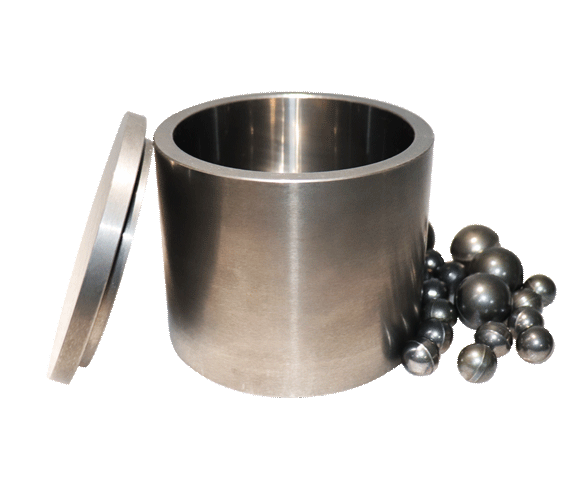
The tungsten carbide planetary mill jar is the wear surface and the sealed sample environment. Its selection should cover grade and binder, usable volume, wall thickness, lid design, sealing method, pressure and temperature limits, and compatibility with the selected mill. A jar can be made from tungsten carbide and still differ from another jar in binder content, surface finish and internal geometry. Those differences can affect wear, cleaning and the risk of cross-contamination. The material certificate and the actual production grade should be requested, not assumed from the product family name.
Sealing deserves particular attention. A jar used for dry milling may have different requirements from one used with a solvent, an inert gas or a reactive powder. Ask which elastomer or sealing principle is used, whether the closure is reusable, how the jar is cleaned and whether a replacement seal is available. If cobalt or tungsten is a restricted element in the final product, the jar should be tested with a blank run before it is accepted for routine work. A tungsten carbide jar is a high-wear-resistance option; it is not an inert container, and the difference matters.
Tungsten Carbide Mill Ball
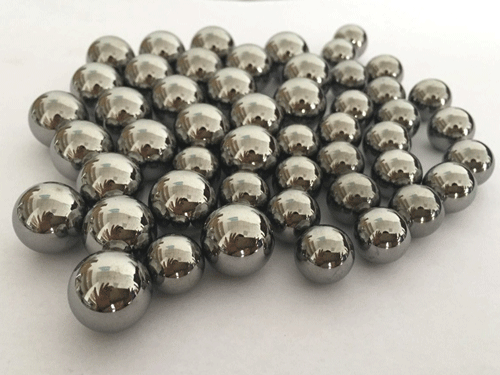
The tungsten carbide mill ball completes the wear couple. Ball diameter, size distribution, grade, surface condition and total load influence the impact-to-attrition ratio and the wear pattern on the jar. A dense tungsten carbide ball can be effective for hard phases, but the same density increases the load and changes the energy available at a given mill setting. Ball selection should therefore be linked to jar volume, sample mass and the target size reduction mechanism. A single ball size is rarely enough information for a trial plan; the supplier should confirm the available diameters and the recommended starting distribution.
Record the ball grade and lot, inspect for chips before use and keep the same grade from trial to scale-up unless a controlled change is part of the study. Cleaning between samples should include the balls, the jar, the lid and the seal. For sensitive work, a short conditioning run with a representative or sacrificial powder can help establish whether the cleaning procedure is adequate. The ball page establishes the product family; exact dimensions, tolerances and material certificates should be confirmed in the quotation.
What the TENCAN Combination Clarifies
Evaluating the continuous mill together with the tungsten carbide jar and ball narrows the number of variables. The mill defines the process mode, the jar defines the chamber and sealing, and the ball defines the grinding media. A laboratory can ask for one coordinated trial instead of sourcing three unrelated components. The combination also supports a more realistic wear assessment, because the jar and balls are tested in the same mill under the same motion and atmosphere. That does not replace sample analysis, but it makes the analysis more interpretable.
Retsch: A Laboratory Milling Platform with Broad Accessory Logic
Retsch is a German manufacturer of laboratory milling and sample-preparation equipment with planetary ball mill ranges and matched accessories. A positive reason to include Retsch in a laboratory selection is its catalog structure: buyers can compare mill families, bowl materials and operating accessories within one established platform. That is useful when a laboratory wants a common vendor framework across several sample types, or when method development has to be documented around a familiar laboratory milling system.
For tungsten carbide duty, the relevant questions are current bowl and ball availability, usable volume, sealing arrangement and whether the required tungsten carbide grade is part of the current catalog. Those points should be confirmed from current Retsch documentation. The brand-level strength described here is platform breadth and accessory logic, not an asserted numerical advantage. If a laboratory already uses Retsch equipment, a tungsten carbide comparison should start by checking compatibility with the existing mill and by asking for the current material and size options rather than relying on a general catalog memory.
Fritsch: Application-Led Planetary Milling for Laboratory Programs
Fritsch is a German manufacturer of laboratory mills and particle-sizing equipment, with planetary mill offerings for laboratory comminution and mixing. Its positive selection value lies in application-led method development: a laboratory can compare milling energy, bowl material, ball size and analytical outcome as part of one experimental program. That orientation is useful when the target is not simply to buy a jar, but to establish a repeatable method for a hard or abrasive material.
For a tungsten carbide project, confirm the current availability of tungsten carbide bowls and balls, the usable volume, the sealing package and the cleaning procedure. Also ask how the selected accessories are matched to the mill model and how operating limits are documented. Fritsch's strength in this guide is its application focus and its laboratory-scale method-development perspective. Model-specific speeds, pressures and material grades should be taken from current Fritsch documentation, not inferred from this brand-level summary.
Side-by-Side Selection Matrix
| Selection dimension | TENCAN | Retsch | Fritsch |
|---|---|---|---|
| Reference point in this guide | Continuous planetary ball mill plus tungsten carbide jar and mill ball pages | Brand-level planetary mill and laboratory accessory platform | Brand-level planetary mill and laboratory method-development platform |
| Application emphasis to discuss | Continuous operation with a tungsten carbide wear couple; feed, residence time and discharge questions | Laboratory-scale mill and accessory selection within a broad catalog framework | Application-led milling trials with bowl, ball and parameter development |
| Tungsten carbide tooling | Dedicated jar and ball product references; confirm grade, dimensions, binder and sealing | Confirm current tungsten carbide bowl and ball availability, volume and compatibility | Confirm current tungsten carbide bowl and ball availability, volume and compatibility |
| Process-mode question | Steady-state feed, residence time, discharge, cleaning and sampling | Batch size, mill capacity and accessory matching | Batch size, mill capacity and application parameters |
| Documentation to request | Drawings, material certificate, usable volume, operating limits, seal details | Current datasheets, accessory compatibility and operating limits | Current datasheets, accessory compatibility and operating limits |
| Sample-evaluation route | Send sample, target size and contamination limit; review mill, jar and ball together | Ask about application testing and current accessory options | Ask about application testing and method-development support |
Application Scenarios and the Questions They Create
Hard and Abrasive Inorganic Materials
Minerals, oxides, slags and ceramic powders can wear softer jar materials quickly. Tungsten carbide tooling is relevant because wear resistance is part of the application requirement. The trial should still measure contamination and particle size rather than relying on appearance. For a continuous mill, the feed must be stable enough to maintain steady state; for a batch mill, the sample mass and jar fill determine whether the result is representative. Define the decision before choosing the mode.
Metals, Alloys and Mechanical Alloying
Mechanical alloying and metal-powder milling introduce cold welding, atmosphere control and heat-management questions. A dense tungsten carbide ball can deliver useful impact energy, while a sealed jar can help define the atmosphere. The binder chemistry must be considered when the final alloy has strict limits on cobalt, nickel or tungsten. If those elements are restricted, tungsten carbide may not be the appropriate wear couple, and an alternative material should be evaluated with the same verification discipline. That is a material-compatibility decision, not a brand ranking.
Battery, Electronic and High-Purity Materials
Battery precursors, electronic ceramics and high-purity oxides often have tight limits on iron, copper, cobalt and tungsten. Tungsten carbide can be a fit for hard raw materials, but the contamination budget should be established before the trial. A blank run with the same jar, balls, solvent and duration is more informative than a general statement about wear resistance. Cleaning validation is equally important, because a jar that is acceptable after one sample may carry residue into the next campaign if the changeover procedure is not defined.
Geological, Ceramic and Model Samples
Geological samples and model ceramic systems often need representative sampling before milling. Density segregation, jar volume and ball size can change the split between coarse and fine fractions. A tungsten carbide set should be selected for the hardness and mass of the sample, not simply because it is the most wear-resistant option in the catalog. Run a small qualification batch, measure the size distribution with a stated method and keep the operating record with the sample. A result from one material should not be generalized to another.
Wet or Dry, Sealed or Open: Decide Before Comparing Hardware
Wet milling can improve dispersion and control dust, but it adds solvent compatibility, vapor pressure, sealing and cleaning questions. Dry milling avoids liquid handling but can create dust, aggregation and heat. A continuous mill adds feed consistency and discharge control to either choice. Before comparing quotations, write a process statement: sample chemistry, target size, acceptable contamination, atmosphere, temperature sensitivity, solvent, solids loading, batch or continuous mode, and the analytical method that will decide acceptance.
Ask each supplier how the proposed jar is sealed, which elastomer is used, whether the closure is reusable and how the jar and lid are cleaned. For oxygen- or moisture-sensitive powders, the question is not only whether a glovebox can be used, but whether the jar can be filled, sealed and transferred without exposing the sample. For thermal-sensitive materials, define the maximum permissible temperature and ask how the mill and jar are monitored. These questions protect the sample and make the comparison more meaningful.
Continuous Operation and Scale-Up Logic
A continuous planetary ball mill should be evaluated at steady state. Residence-time distribution, feed rate, hold-up, media loading, rotational speed and discharge design all interact. A useful trial includes a tracer or a timed feed change to show how quickly the mill reaches a new condition, followed by sampling at stable intervals. Cleaning and changeover should be timed as part of the trial, because a continuous unit is only practical when the cleaning procedure matches the campaign length.
TENCAN's continuous mill provides the platform for this work, but the result still depends on the jar, ball and sample. A short batch test can inform the starting parameters; it does not prove continuous performance. Ask for a trial plan that states the feed method, target throughput, sampling points, analytical methods and acceptance criteria. If the laboratory cannot yet define those items, start with a smaller batch qualification and use the result to design the continuous test.
Contamination Control and Analytical Verification
Tungsten carbide wear is inevitable at some level, so the practical target is a quantified and acceptable level rather than an unsupported claim of zero contamination. A blank run should use the same jar, balls, solvent and operating time as the sample. Analyze the blank and the milled sample with a method appropriate to the elements of concern, and report the result in the same units as the specification. Particle size should be measured by a stated method, with the sample preparation and dispersion procedure recorded.
Keep a wear log for the jar and balls, inspect sealing surfaces and replace components according to the supplier's instructions. If the contamination result is close to the limit, reduce the milling energy, change the ball size distribution, shorten the duration or evaluate a different jar material. Those are process decisions, not evidence that one brand is inherently better. The goal is a documented operating window that the laboratory can repeat.
Procurement Checklist for a Tungsten Carbide Milling Program
- State the material, feed size, target size and required analytical method.
- Define the maximum allowed contamination for tungsten, cobalt, nickel and other elements of concern.
- Specify batch or continuous mode, target throughput and the minimum representative sample mass.
- Request the jar grade, binder system, usable volume, wall thickness, lid and seal details.
- Request ball grade, available diameters, tolerances, surface condition and recommended starting load.
- Confirm operating limits for speed, temperature, pressure and atmosphere.
- Agree the cleaning and changeover procedure, including seals and discharge areas.
- Ask for material certificates, drawings, spare parts and standard-versus-optional configuration.
- Require a blank run and a representative sample trial before acceptance.
- Record particle size, contamination, yield, cleaning time and any visual wear after the trial.
A Practical Sample Evaluation Path with TENCAN
A focused evaluation can begin with a sample and a short specification. Provide the material, feed mass, target particle size, contamination limit, preferred atmosphere, solvent if any, and the analytical methods that will be used for acceptance. Ask TENCAN to review the continuous mill, tungsten carbide jar and tungsten carbide ball as one configuration. The first stage can qualify a small batch; the second can examine steady-state continuous operation if that mode is relevant.
After the trial, compare the blank and sample analyses, inspect the jar and balls, and review the cleaning record. Use the result to decide whether the proposed grade and volume should be retained, whether the ball distribution should change, or whether the process needs a different operating window. This is a controlled next step rather than a promise of a particular particle size. The most useful outcome is a documented configuration that can be repeated and audited by the laboratory.
Sources and Further Reading
TENCAN continuous planetary ball mill: product page. TENCAN tungsten carbide planetary mill jar: product page. TENCAN tungsten carbide mill ball: product page.
Retsch and Fritsch are discussed here only at brand level. Their current official catalogs should be consulted for model-specific dimensions, accessory availability, operating limits and quotation details. No specific competitor model, performance value or third-party ranking is asserted in this guide.